Tribe
Grow from two causes to thirty-plus — without growing the interface.
Tribe (rebranding to Consciously) is an Amazon browser plugin that tells you, as you shop, whether a brand helps or hurts the causes you care about. It could surface two ethical issues; it needed to handle dozens. I was brought in to rebuild it from the ground up so it could scale to any number of values without getting harder to use.
Choose the causes that matter to you
30+ issues available · only your selection shows while you shop
Shop your values, in the moment.
Tribe sits in your browser while you shop Amazon and tells you, brand by brand, whether a company helps or hurts the things you care about — then points you to better alternatives. It started narrow, focused on cruelty-free, and worked well for exactly that. The ambition was much bigger: make it personalizable to anyone’s values.
Two issues fit. Thirty would flood it.
The plugin displayed only two ethical issues; the intended number was effectively limitless. Just adding them all would drown a small browser surface — every product page a wall of badges nobody asked for. The real problem wasn’t capacity. It was keeping the tool simple while it got far more powerful.
Show everyone everything and you’ve shown no one anything.
Let people choose what they care about.
The unlock was to make the issues selectable. Instead of showing every cause, the plugin lets a shopper pick the ones that matter to them — and then speaks only to those. Thirty issues in the system, but only your handful on screen. A personalized dashboard closed the loop, showing both your own impact (the swaps you made) and the collective impact of everyone using Tribe.
Pick your values
A one-time choice that filters everything after it — the interface stays small no matter how big the catalog of causes grows.
See it add up
Your contribution and the community’s, together — turning quiet product swaps into visible, motivating progress.
Choose the causes that matter to you
30+ issues available · only your selection shows while you shop
Your choices, added to everyone else’s — the reason a small daily swap feels like it counts.
Illustrative concept · sample figures, not real usage data
No production UI survives from this engagement, so the two visuals above are honest Blueprint reconstructions of the concepts — not the original screens. The planning artifacts below are the real deliverables.
A rebuild, mapped story by story.
Rebuilding a live plugin “from the ground up” is where scope goes to die. I ran it as agile story mapping — every epic broken into stories across three swimlanes (UX, visual design, implementation), so the team could see the whole build and ship it in coherent slices rather than a risky big-bang.
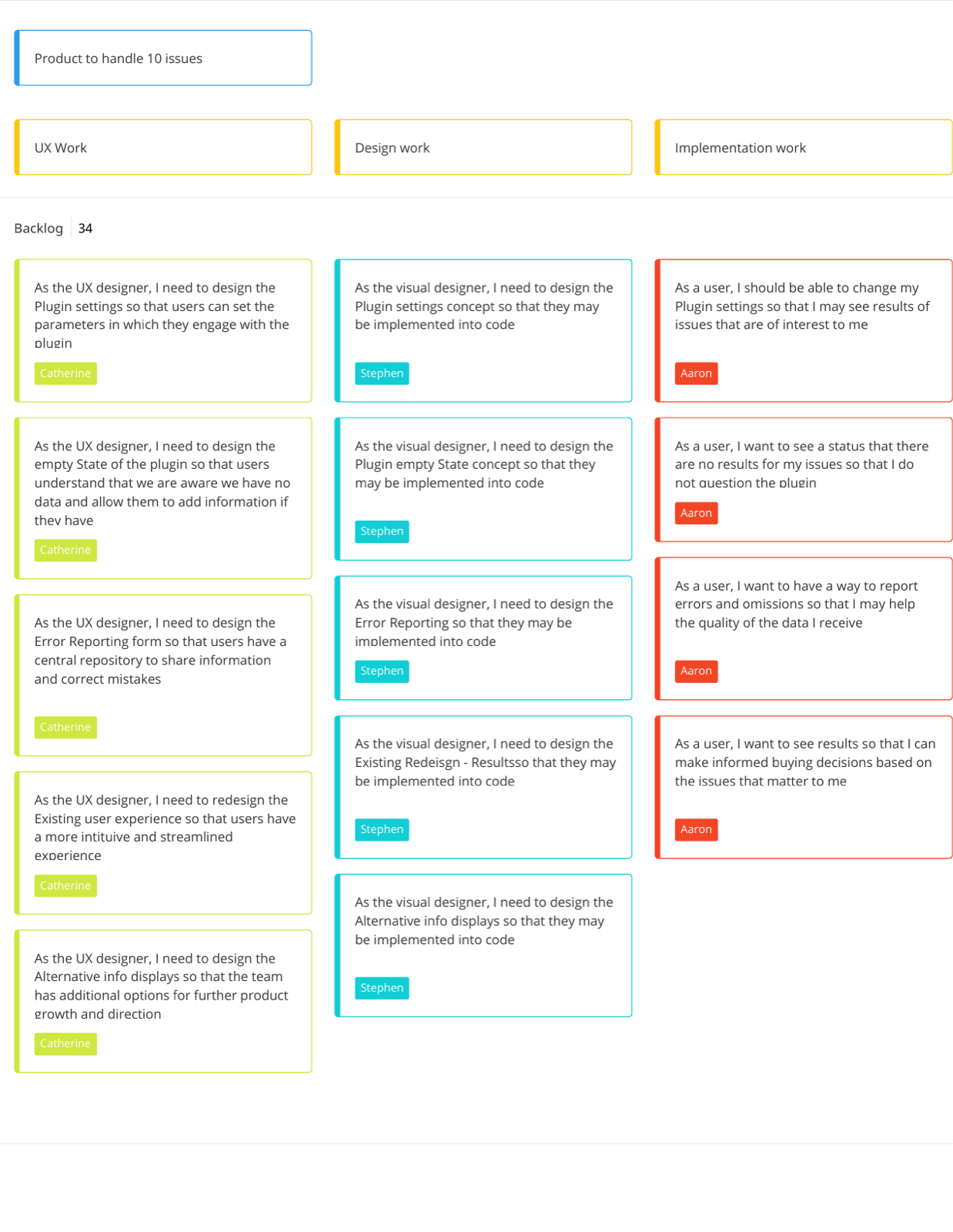
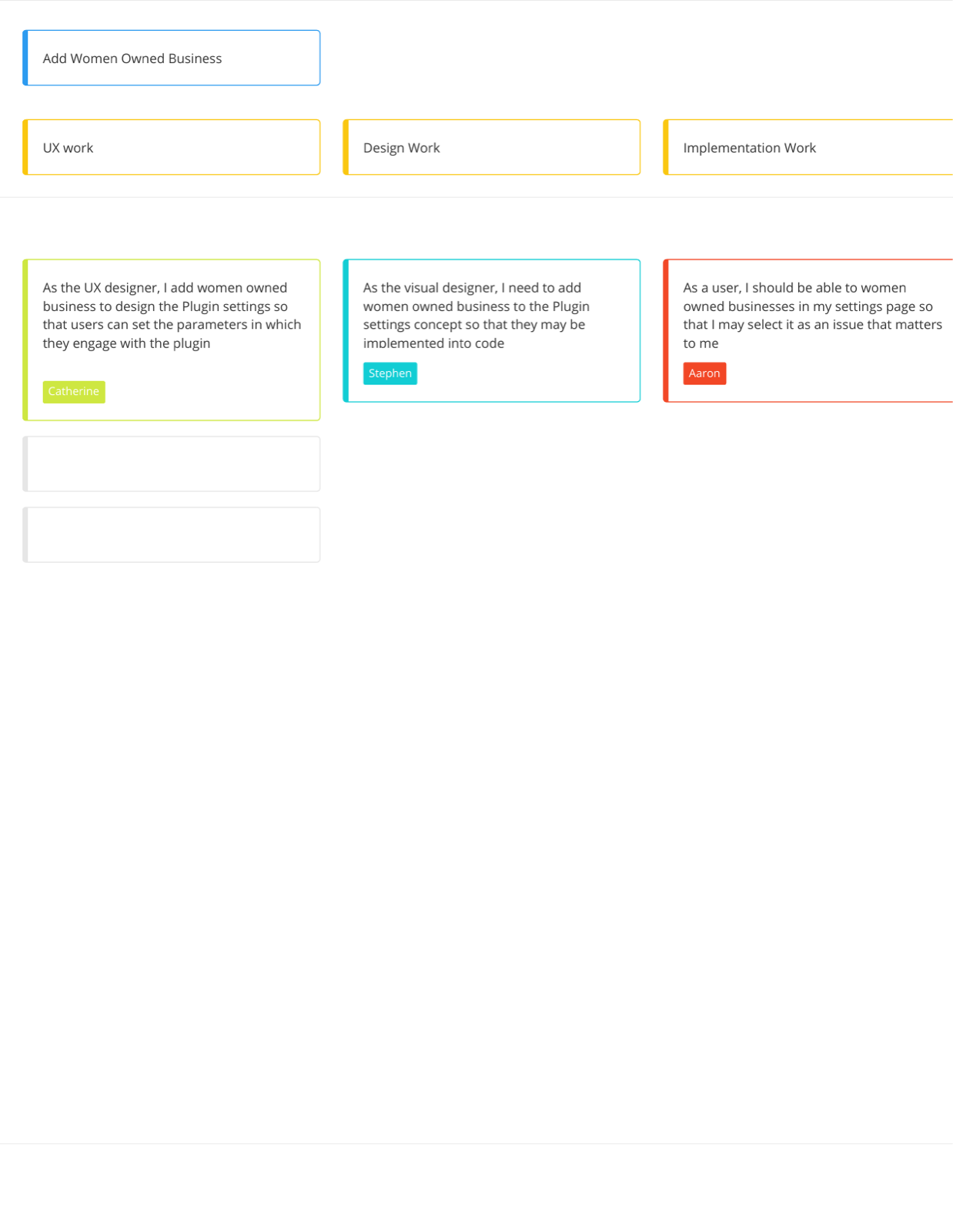
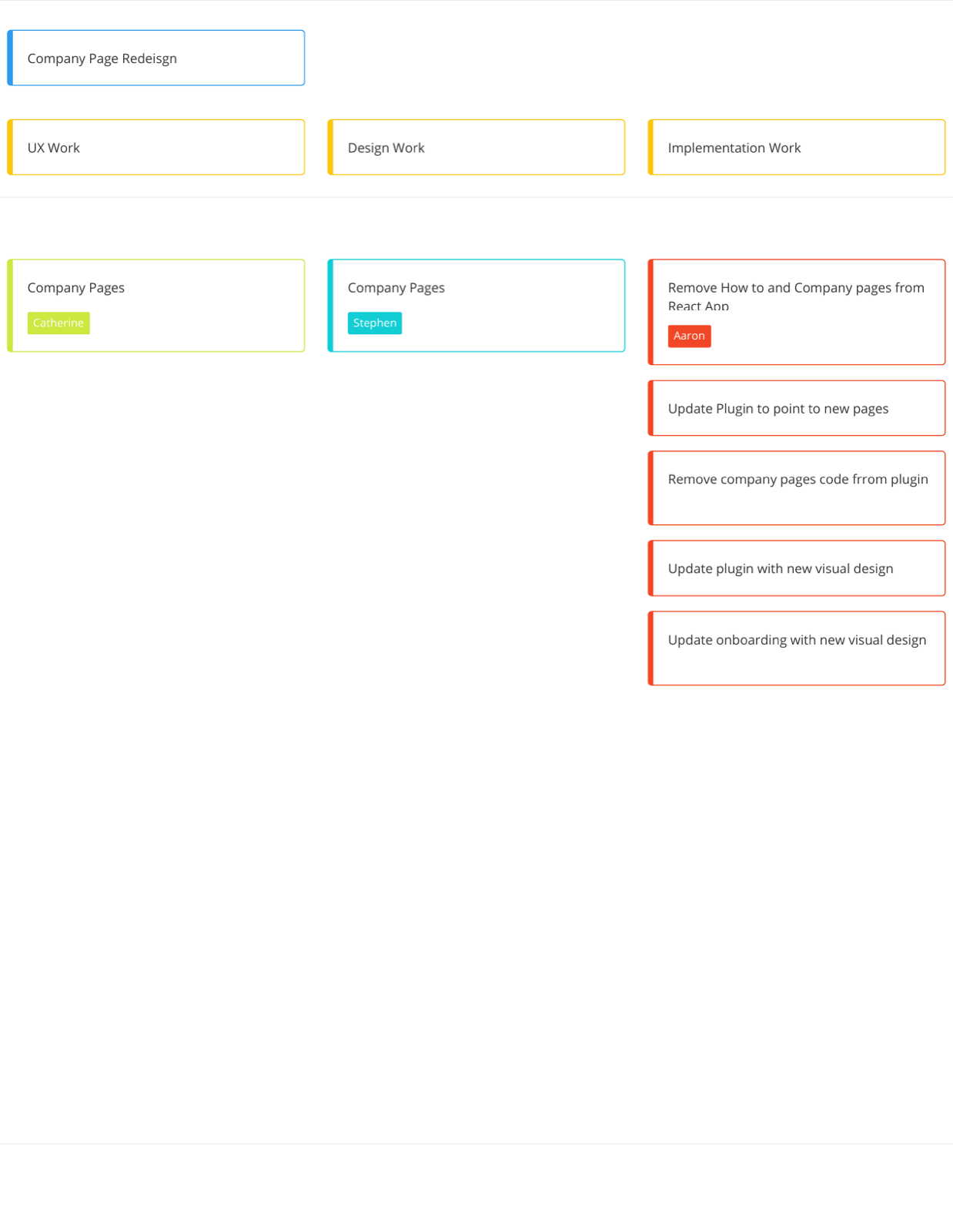
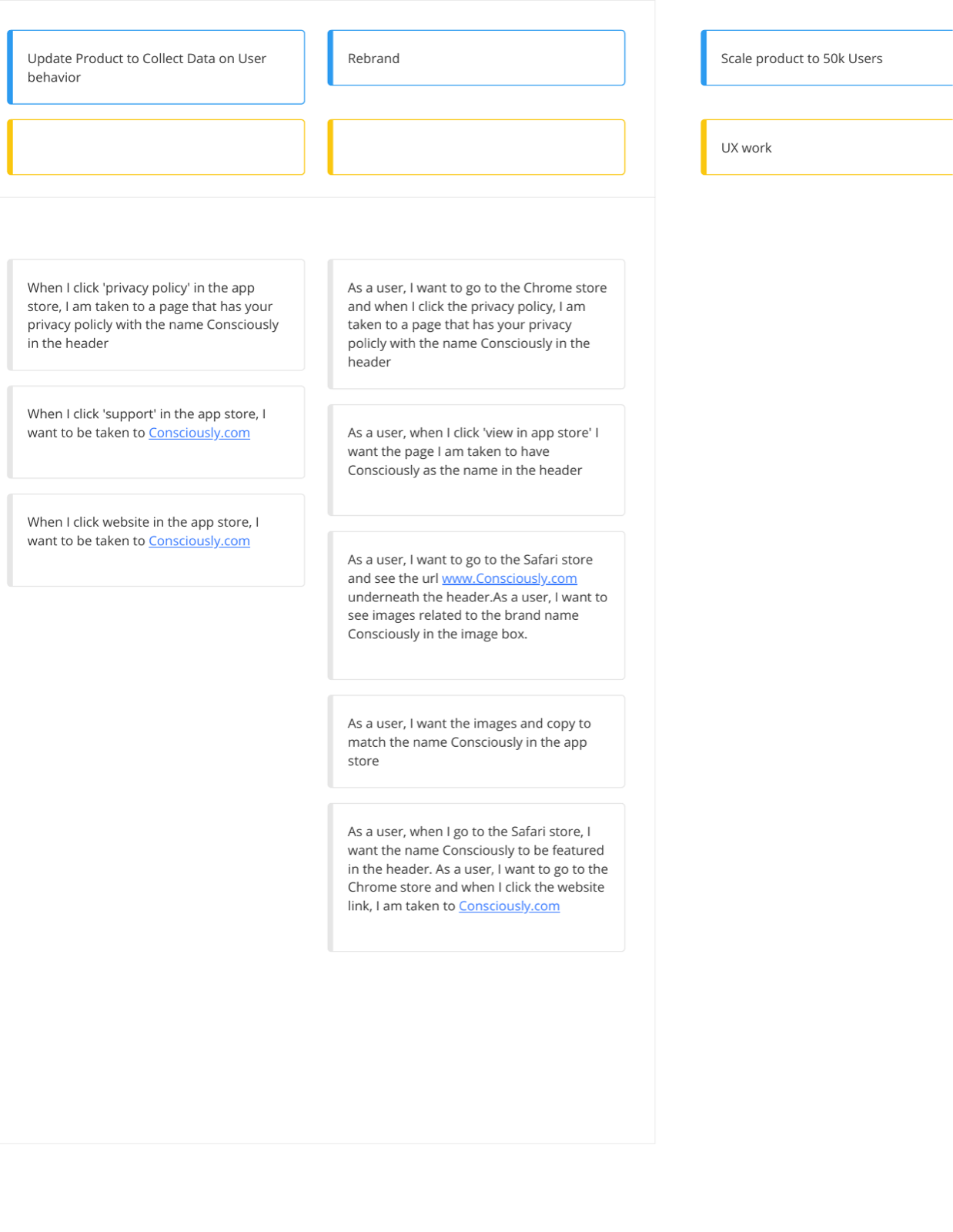
Agile user-story maps across UX (Catherine), visual design, and implementation swimlanes — the real planning deliverables from the engagement.
From Tribe to Consciously.
The scope also carried a rename — Tribe becoming Consciously across the Chrome and Safari stores, the plugin, onboarding, and the privacy policy. The onboarding and registration flow got rebuilt too, so a new user actually understood what the tool did before being asked to install and sign up.
Scale isn’t about showing more — it’s about showing each person less.
The way to grow from two causes to thirty wasn’t a bigger interface; it was letting each person carve out the small slice that’s theirs. Selectable values plus a dashboard that made impact visible kept a growing product feeling personal — and turned a single-issue tool into one anyone could make their own.
Engagement via A Focused Design, as UX designer and technical consultant, with a visual designer and developer. Outcomes in the source are described qualitatively, so I keep them that way.